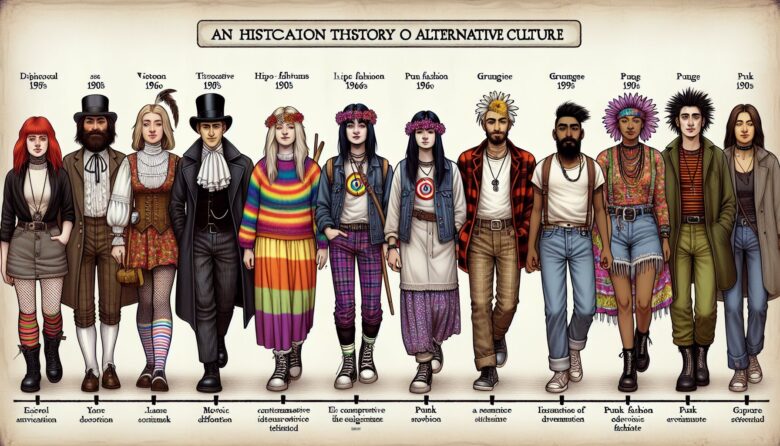
A look into the constellation of alternative cultures brings us face-to-face with a fascinating retelling of societal evolution. Populated by individuals who made the choice of turning their backs on mainstream society’s conventions, these alternative societies have always encouraged change and innovation. Often, they were sanctuaries to the ‘outcasts’ of society, those who wore the mantle of ‘strange’ with pride.
The Emergence of Alternative Cultures
To truly delve into the history of alternative cultures, we must first define them. Alternative cultures essentially refer to lifestyles or societal structures which deviate from the mainstream norm. The idea is not new – humans have a long history of splintering off from broadly accepted mores and values to form their own unique societies.
Throughout history, individuals that were considered outcasts often found solace in alternative cultures. The Bohemian Culture of 19th century Paris was one such home for artists, writers, musicians, and thinkers who sought an escape from the restrictions of mainstream societal norms. They dreamed, they created, and they encouraged change, glamorizing artistic poverty and living lives that were unconventional, radical, and strange in the eyes of conformist society.
In the 1950s and 60s, America saw the rise of the Beatniks and Hippies. These groups rejected conventional virtues of hard work and material wealth, favoring psychedelic experiences, peace protests, and communal living instead. Yet, this was far from an eclipse of societal standards as their sincerity and enthusiasm triggered a wave of social questioning and change across the globe.
Alternative Culture beyond Societal Boundaries
The beauty of all alternative cultures, including the Bohemians, Beatniks, and Hippies, is that they nurtured a sense of community. The inhabitants, strange by mainstream standards, typically shared not only common afflictions of being societal outcasts, but also held common goals, like challenging societal norms and catalyzing change.
Punk rock culture in the 1970s and 80s was perhaps one of the most influential alternative cultures in recent history. Unorthodox and raw, the punk rock movement was an outcry against societal conformity. Where society preached sophistication and order, punk culture craved anarchy and freedom of expression. It encouraged change in various spheres, from music to fashion, from art to politics, fostering a deep sense of unity among its followers – the outcasts who dared to be different.
The LGBTQ+ movement, which has been at the forefront of encouraging societal change for decades, also formed an alternative culture of its own. The Stonewall Riots in 1969 acted as a catalyst, sparking an uproar that shook societal norms concerning gender and sexuality to their roots. Today, drag culture, an integral part of the LGBTQ+ movement, challenges mainstream gender norms with an emphasis on flamboyant personal presentation and performance.
The Enduring Impact of Alternative Cultures
Beyond the boundaries and conventions of mainstream society, alternative cultures have shaped, and continue to shape, the world we know today. Particularly in the fields of art, literature, fashion, and music, their impact is profound.
Take, for example, the grunge movement of the late 1980s and early 1990s. Originating in the Pacific Northwest, grunge music was a fierce rebellion against the glamour and commercialization of the mainstream music industry. It changed the face of rock music, making way for a new era of raw, emotive expression as its legacy.
The very fashion norms we follow today have also been repeatedly influenced by alternative cultures. The Bohemiae introduced comfortable, unstructured clothing, rejecting the corseted dresses of their time. Punk brought tattoos and piercings into the mainstream. Hippie fashion inspired a trend of unisex dressing, while grunge popularized flannel shirts and rugged jeans.
Conclusion: The Ongoing Celebration of Diversity
Alternative culture is, at its core, a celebration of diversity. It not only provides respite to societal outcasts – it also challenges the norm, questions the mainstream, and fosters creativity. By encouraging change and embracing the strange, these cultures pave the way for a more accepting and inclusive society, threading the warp and weft of societal values through their unique patterns of pioneering thought and action. The history of alternative cultures is not merely a chronicle of the past but an ongoing story that continues to influence our present and shape our future.