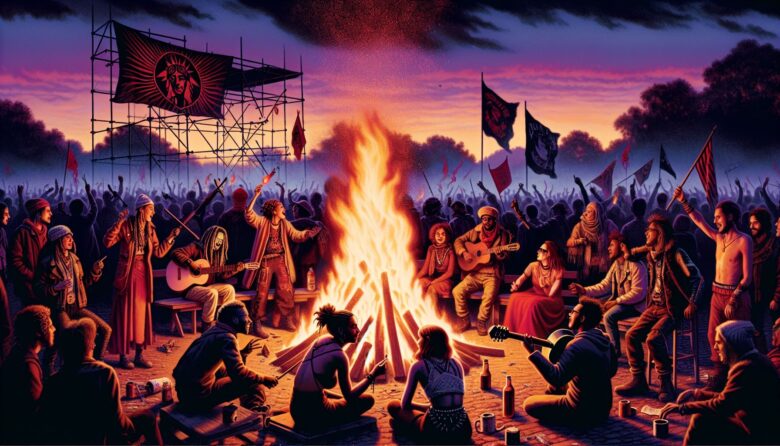
Today’s world is marked by constant flux and overwhelming chaos, where unconventional subcultures have risen from the peripheries and taken center stage. This article aims to explore the intricate weave of one such potent ethos — the fringe culture. Embraced by revolutionaries the world over, the fringe culture serves as a catalyst for wresting power from the elite and restoring it to the masses.
Fringe Culture: The Undercurrent of Change
What is fringe culture?
Fringe culture predominantly stands for a range of unconventional or non-mainstream cultural practices, narratives, and ideologies outside the purview of the dominant norms. It is, in essence, a counterculture that continually questions, challenges, and subverts prevalent politico-societal paradigms.
Revolutionaries, who occupy an essential space within the fringe, embody this counterculture by actively engaging in dissent and rebellion against oppressive power structures and institutional inequities. They take the unconventional route, going against the mainstream flow, disruptive yet creative in their methods and ideologies.
Entertainment as Crusade: The Role of News and Media
In today’s digital age, the screens have morphed into socio-political battlegrounds. News networks and entertainment platforms play a significant role in amplifying the voices of revolutionaries, helping their ideologies permeate into the collective consciousness of societies.
Fringe News: Drawing Attention to the Marginalized
Mainstream media often neglects dissenting voices, portraying a redacted version of reality. In response, fringe news outlets have stepped up as alternative media, spotlighting the unheard stories of resistance and inequality, giving an unfiltered view of the revolution on the frontline.
Entertainment: Catalyst for Ideological Transformation
Entertainment platforms have long been a vehicle for socio-political narratives. Today, the fringe culture leverages these platforms to articulate their discontent and challenge political power structures. Scathing satires, thought-provoking documentaries, and evocative art forms have become bastions of revolutionary thought, inciting conversations, and nudging audiences towards ideological transformation.
Harnessing Fringe Culture: A Revolutionary Blueprint
For revolutionaries, the fringe culture provides a blueprint for shaking the status quo. However, a strategic approach is essential to convert fringe ideologies into a potent force for socio-political change.
Promoting Active Dissent
Fringe culture promotes active dissent, encouraging revolutionaries to challenge conventional wisdom and established doctrines. By fostering open dialogue and constructive criticism, it triggers social introspection and paves the way for reformative change.
Empowering the Masses
Fringe ideologies focus on the power of the aggregate, the common people. They aim to dismantle hegemonic structures, freeing the masses from the shackles of exploitation. For revolutionaries, this focus provides a powerful tool to spearhead a grassroots revolution.
Fostering Unity and Solidarity
Ethos of the fringe culture promotes unity and solidarity among revolutionaries. By endorsing such commonalities, revolutionaries can galvanize diverse communities and harness their collective strength to effect transformative change.
Fringe Culture: Revolutionary Torchbearer?
The fringe culture has incredibly invigorated modern revolutions, providing them a significant boost. As seen in movements like the Arab Spring or the Hong Kong protests, the fringe has established itself as an influential player in instigating change.
Nevertheless, the fringe culture’s potential to fully mold socio-political realities remains a subject of intense debate, garnering skeptical attention from mainstream establishments. Detractors warn of a culture of anarchy without constructive outcomes, while proponents highlight its role in balancing power and prompting societal introspection.
Fringe culture’s role as a revolutionary torchbearer is neither a universal truth nor an absolute fallacy. Its effectiveness lies predominantly in the revolutionaries’ ability to strategically adopt the counterculture and channel it towards their cause.
Conclusion: Fringes Shaping the Future
As we delve deeper into the 21st century, it’s increasingly apparent that fringe culture and its role in revolutionary movements cannot be dismissed as a mere distraction or anomaly. The rising voices from the fringes are shaping public discourse, challenging mainstream ideologies, and, importantly, instigating monumental shifts in the overall socio-political landscape.
However, the future will reveal whether the fringe culture becomes a mainstay in the revolutionary playbook or recedes back into the peripheries. But one thing is certain, acknowledging their potency is the first step towards understanding the socio-political upheavals of our times, and possibly, our future.