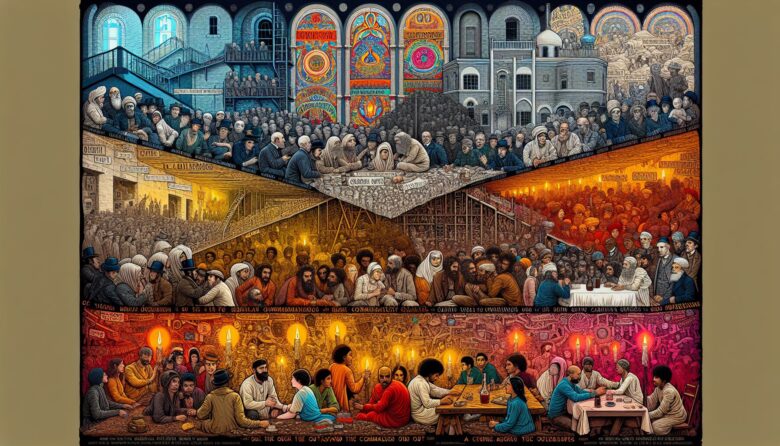
Throughout history, marginalized groups and outcasts have often been forced to organize in secret, forming underground movements to fight against oppression and discrimination. These movements have played a crucial role in bringing about social change and empowering those who have been excluded from mainstream society. From secret societies to resistance movements, the history of underground movements for outcasts is both rich and complex.
The Emergence of Underground Movements
The history of underground movements for outcasts can be traced back to ancient times when social hierarchies were firmly ingrained in society. In many cultures, certain groups of people were considered outcasts due to their ethnicity, beliefs, or social status. These outcasts often faced discrimination and violence, leading them to seek refuge in underground networks where they could find solidarity and support.
One of the earliest forms of underground movements for outcasts can be found in ancient Rome with the emergence of the early Christian community. Christians were persecuted and marginalized by the Roman Empire, forcing them to gather in secret to worship and support each other. These underground gatherings eventually grew into a powerful movement that challenged the authority of the Roman state and led to the eventual adoption of Christianity as the state religion.
The Role of Secret Societies
Throughout history, secret societies have played a crucial role in providing outcasts with a sense of community and protection. These organizations often operated in the shadows, using secret codes and rituals to maintain their clandestine nature. One of the most famous secret societies is the Freemasons, which was founded in the early 18th century as a way for like-minded individuals to connect and support each other.
Secret societies have often been a source of fascination and fear for mainstream society, with many conspiracy theories and myths surrounding their activities. However, for outcasts and marginalized groups, these organizations have provided a vital lifeline in times of persecution and oppression.
Resistance Movements and Revolutionary Groups
In more recent history, underground movements for outcasts have taken on a more political dimension, with many groups actively fighting against oppression and injustice. From the civil rights movement in the United States to the anti-apartheid struggle in South Africa, underground movements have been at the forefront of social change and revolution.
These movements often operate outside of the law, using guerilla tactics and underground networks to challenge the oppressive forces of the state. While their methods may be controversial, their impact on society cannot be denied. By bringing attention to the plight of outcasts and marginalized groups, these movements have forced mainstream society to confront its own biases and prejudices.
Conclusion
The history of underground movements for outcasts is a testament to the resilience and determination of marginalized groups throughout history. From secret societies to resistance movements, these organizations have provided a vital space for outcasts to come together, organize, and fight for their rights. While their methods may be contentious, their impact on society has been profound.
As we look back on the history of underground movements for outcasts, we must remember the sacrifices and struggles of those who have fought for a more just and inclusive society. By recognizing the contributions of these movements, we can continue to work towards a world where all individuals are valued and respected, regardless of their background or social status.